Friday, January 3, 2014

2013: Year of Eco-Thrifty


It was a close competition, and the results have been delayed, but it is finally confirmed that 2013 was the Year of Eco-Thrifty.

Runners-up include: The Year of Pete & Andy; The Year of Obama’s embarrassments; The Year of Sonny Bill; and, The Year without defeat (All Blacks).

Eco-Thrifty narrowly beat out Pete & Andy due a strong cast that included Lorde, Macklemore, and Francis (aka, ‘da pope’).


Lorde (Auckland’s Ella Maria Lani Yelich-O’Connor) became the first New Zealander to reach number one on the Billboard Hot 100 with her single, “Royals.” According to various sources (including Wikipedia), she wrote the song in response to the opulence celebrated in much of hip-hop and rap music, including big, expensive cars, expensive alcohol, and the obligatory “bling.”

If the lyrics in “Royals” slipped your attention, then the lyrics and beat of Macklemore’s “Thrift Shop Song” surely didn’t. Although the song experienced heavy rotation on Whanganui radio for only a month or two before falling off the radar, its rotation was very heavy.


Macklemore, too, takes the piss out of consumer culture (and R. Kelly) by ridiculing those who would purchase a t-shirt for $50 (US), when one could outfit oneself from head to toe at an op shop for $20 and “look incredible.”

They be like, "Oh, that Gucci - that's hella tight."
I'm like, "Yo - that's fifty dollars for a T-shirt."
Limited edition, let's do some simple addition
Fifty dollars for a T-shirt - that's just some ignorant @#$%

This is, in my opinion, hands-down the best profanity-filled song of the millennium.

Coppin' it, washin' it, 'bout to go and get some compliments
Passin' up on those moccasins someone else's been walkin' in
Bummy and grungy, @#$% it, man
I am stuntin' and flossin' and
Savin' my money and I'm hella happy that's a bargain, @#$%

As would be suspected from a pope, Francis sends his eco-thrifty message with less profanity, but his words have been called profane by those who wish to maintain the status quo in the Catholic Church. Gone is the opulence of previous popes, and in steps a man of humility unafraid to challenge the devastating effects of wealth inequality around the world.


Conspicuous displays of wealth are in almost every case the antithesis of eco-thrifty. Instead of the win-win-win situations I write about that save money while being good for people and the planet, I would describe them as lose-lose-lose. Specifically, opulent lifestyles often waste money while having large environmental impacts. Additionally, research shows a strong correlation between wealth inequality and social problems (The Spirit Level, Wilkinson & Pickett, 2009).

While Francis’ courage undoubtedly upsets the wealthiest 1%, it has surely boosted the morale of the poorest 50% of global citizens be they Catholic or not. It appears he has taken seriously the teachings of an earlier proponent of eco-thrifty lifestyle, Jesus, instead of embracing the power and prestige of The Church. Good on you, Frank.

And finally, the Light Bulb Moment Award for 2013 goes to the Wanganui District Council for finally recognizing that running eight light bulbs outdoors on sunny days was neither eco nor thrifty. WDC is also the recipient of the Kicking-and-Screaming Award for the same action (turning off outdoor lighting during the day) because it took over three years and four columns in the Chronicle to get Council to take action.

But as a wise person once said, “Better late than never.” Let’s hope that 2014 finds WDC coming to the table on time.

 Peace, Estwing

Wednesday, January 1, 2014

New Years Permaculture Update

Here are some pictures of our pumping permaculture property.

Good eats

A lettuce crop where I harvested garlic just 2 weeks ago. 

More on the vine

Bawberries, as Verti would say.

Looking forward to our first grapes this year.

Mo bawberries pwees.

Pumpkins forming.

Another cubic metre of compost.

Spuds in the ground.

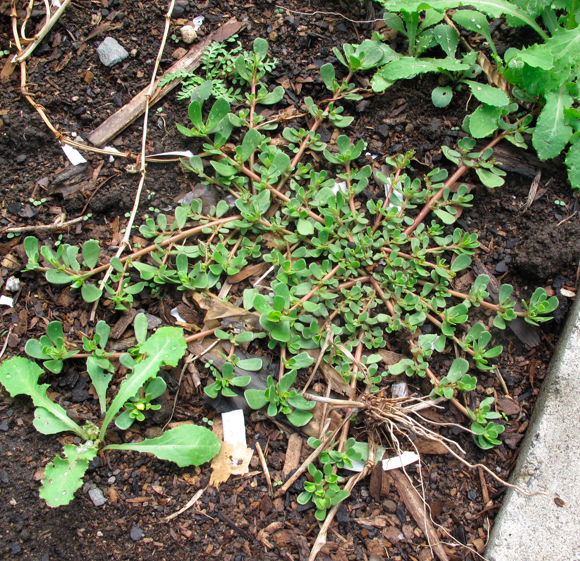
"Wild" purslane.

Kittens next door.

A little colour.

Bean blossoms.

Bean blossoms.

Bean blossoms... fooled you. Apples.

Plums.

Baspberries.

Melons in the ground. Hopefully it will be hot enough for fruits to form. 

Red hot chilly peppers - blossoming.

Our first oranges.

Guava fruits forming from fertilized flowers.

Dinner tonight.

Dinner tonight.

Peace, Estwing

Sunday, December 29, 2013

Is there an H in Hypocrite? Climate Change Denial


Editor's note: This ran as an opinion piece in the Wanganui Chronicle on Friday, 27th December. 


Beware those bearing H’s.

No, this has nothing to do with the spelling of W(h)anganui, although I suspect there is ample crossover with those who have come to embrace the word hypocrite when attacking individuals who speak out on climate change. In other words, it’s likely that the same people who do not want an H in Whanganui are more than happy to draw the mighty H from their quiver and quill as a first-line offensive against climate change activists and ordinary citizens who have the courage to bring up the issue in the press.

In our feel-good, consumer, deflect-blame Western culture, I reckon the worst thing you can call someone is a hypocrite. We all know that we do not live 100% by our values 100% of the time, but the last thing we want to hear is someone else telling us. I suspect it is part of a psychological defense mechanism.

Knowing this human tendency, the worldwide, corporate-funded climate change denial network has come to advise its “trolls” to use the term at every possible opportunity. Calling someone a hypocrite has become a common technique of climate change deniers when asking climate scientists or activists how did they travel to a certain conference, protest, or other event. It is meant to shut down the conversation before it begins by calling their credibility into question because they may have traveled by automobile or airplane.

In Whanganui, our Chronicle Letters Page climate change denial trolls – two of whom do not live anywhere near the River City – have learned this technique, presumably from an on-line tutorial from the right-wing Heritage Foundation or other such corporate-funded denial organization.

About six weeks ago, a local writer to the Chronicle – who appears to lack enough courage to use their first name when signing her or his letters – suggested I was a hypocrite for expressing my opinion that a predicted increased incidence of severe weather events would likely make clearing sand from the Castlecliff Beach car park more costly in the future. A prudent approach, I suggested, that would both save money (rates) and reduce pollution (carbon dioxide) would be to downsize the massive, underused car park in a managed retreat.

Of course the obvious response to this reasoned, win-win, eco-design solution is to call the messenger a hypocrite. Duh.

I have been called many things in my long and lonely life, but never a hypocrite. My street ‘cred’ is ‘legit’, yo.

I suspect that anyone who knows me would agree I am many things good and bad, but not a hypocrite. Regardless of political affiliation, it would be difficult to find a former colleague of mine willing to say I am nothing if not genuine in my words and deeds. Although I would not hold a candle to Buddha or the Dalai Lama, a colleague did once call me Bodhisatva. Go ahead and laugh, but this may be closer to the truth than you think. After all, I did teach Walter Becker’s son when he was in year 9, but do not remember if he took me by the hand during our parent-teacher conference*.

Although I share a car with my wife, I ride a bicycle and take the bus the vast majority of the time. I have traveled between Whanganui and Hamilton over a dozen times on board Intercity. When purchased a week in advance, the return fare costs less than half the price of petrol alone. Public transport reduces carbon emissions, and I have time to read, write and sleep on the bus.

I suppose this means those who wish to call me a hypocrite will simply say I’m self-righteous. With some people you cannot win, but that does not stop them writing letters to the paper, nor should it. Keep ‘em coming peeps, but please follow these simple instructions: do your homework first; only use quotation marks for direct quotes; include sources and references for anything that is not considered common knowledge; have someone proofread your work; Use your full name; and, above all else, don’t write anything that will end up embarrassing you in front of the entire city.

It takes courage to write something for public consumption, and I admire courage.

* In case you missed it, Walter Becker is ½ of Steely Dan.

Peace, Estwing

Friday, December 27, 2013

Swales and Rain Gardens for Water Management


It is encouraging to see the number of people engaging in meaningful dialogue about important local issues through the Letters page of the Chronicle. Sadly, too often these letters include references to failed attempts to work with Wanganui District Council on strategies that work with nature instead of against it.

For some reason, our Council appears stuck in the past on many issues of infrastructure and economic development. From most accounts, the 1950s were a great time to be alive, but in many cases ‘50s thinking no longer applies.

All of this makes it particularly significant that WDC Chief Water Engineer, Kritzo Venter, has been active and vocal about promoting progressive water management strategies that ‘mimic’ those that nature itself has developed over millions of years. (That is some investment in R&D, ain’t it?!?)

Small swale and rain garden. 

One of those water management strategies – swales – has been in use for decades in some places around the world. A swale is a long, narrow earthwork that runs perpendicular to slope. They slow the flow of surface runoff and facilitate infiltration into the ground. They are perfectly level, unlike ditches, which are sloped to drain water away like a river. Water in a swale soaks into the ground instead of running over it. A carefully constructed swale includes a level-sill spillway that gently allows it to be overtopped in a controlled manner in the event of extreme rain.

The use of swales is the type of win-win-win situation I write about in this column because it: 1) reduces stream and river levels during flood events; 2) increases groundwater reserves that can be called upon during periods of drought; and, 3) significantly reduces the overall cost of infrastructure. Eco-thrifty at its best.

For example, two years ago I was asked to consult on a proposed residential development in Kaiwhaiki that had significant drainage problems. I was told the 10-year-old quote to ‘solve’ the problem the ‘old way’ using pipes and culverts was for half a million dollars. After picking my jaw up off the floor, I told them that good eco-design, which would include cluster housing and the use of swales, would significantly slash that price. WDC Chief Planner, Jonathan Barrett, appeared supportive of those ideas during one meeting held at Council.

The other strategy promoted by Kritzo – and praised by Chronicle assistant editor, Anna Wallis – is the use of rain gardens. A common use of rain gardens is to absorb and filter runoff from new parking lots or other such impermeable surfaces. In this way, rain gardens function like wetlands: sponging up excess water and cleaning it through natural processes.

A series of mini-swales and vege gardens make up this garden.

I first learned about rain gardens in 2005 while taking a certificate programme in the States on Organic Land Care. Shortly thereafter I advised a school to install rain gardens in a number of locations where they had persistent drainage problems. This was particularly meaningful in the context of the school because it became a relevant learning experience for students.

In 2009, while living in Raglan, I built a small management system to control an excess of runoff coming from the roof of a newly built outdoor kitchen at a campground. The system consisted of a swale, a level-sill spillway, and a rain garden. We planted the swale with feijoa trees and the rain garden with plants that tolerate periods of wet and dry.

Swales and vege gardens soak up water and keep it from flooding this lawn.

While in Raglan, I also used swales as a metaphor for eco-design during a Pecha Kucha night, where artists and designers share their work through 20 slides with narration of 20 seconds per slide. That presentation, “Thinking Like a Swale,” became the inspiration for a programme I offered at the Josephite Retreat Centre earlier this year to acknowledge the UN year of water. Hopefully, when River Week 2014 comes around next year, I’ll get a chance to present it again to compliment and support the education efforts Kritzo has already made in the community.

Us ‘swale-thinkers’ gotta stick together. It’s a watershed out there.


Sunday, December 22, 2013

Conservative Like Me

Editor's note: This piece ran today as an opinion in the Wanganui Chronicle. It is in response to some complaints by the (radical) right that there are too many 'libral' columnists. This should give you a laugh.


Saturday was the summer solstice, the longest day of the year: a time for celebration and the harvesting of garlic; a time for BBQs and surfing (although, always is also a good time to catch waves); a time to bask in light before the long and slow slide back into the darkness of winter.

Exactly three months ago – 21st September – I wrote the first of five opinion pieces that have appeared in the Chronicle. It may have been beginners luck, but I consider that piece, which linked research on income inequality to social problems, and then to the WDC rates structure, as the best of the lot. On the day it ran, I got a text from a surfing buddy that went something like this: “Awesome article in da paper, bro. Chur. Chur.” Another friend told me, “The Chronicle shouldn’t have labeled it as an opinion. That’s the type of investigative journalism they should be doing.”

Working with the editors of the Chronicle, I had planned specifically for the piece to run on the vernal (spring) equinox as a way to reflect on balance and imbalance in our world and in our city. If you believe the international research that shows a correlation between income inequality and social problems (The Spirit Level, Wilkinson & Pickett, 2009), and can perform basic addition, multiplication and division, you will easily recognize that the WDC rates structure serves to increase the wealth gap in our city, and the annual Council rates rises widen the gap each year. (More on this, hopefully, in 2014.)

The reasons I think it was my best effort include: it is based on respected research and clear local data; it is relevant to everyone who lives in Whanganui; it was written as objectively as possible; and, the equinox was a fine metaphorical launching pad for a critical discussion on this important local issue, although from what I can tell that discussion has not really been happening…yet.

But equinoxes are easy to write about, and peer-reviewed research and replicable data is so boring. Objectivity – Shmogjectivity! The solstice is a time to be bold, opinionated, controversial!

And in that spirit, I would like to point out what has become glaringly obvious in the pages of the Chronicle: So many radicals writing so many opinions. The Chron is clearly out of balance and needs more conservative voices like mine!

Who, besides me, will stand up for conserving natural resources, other than Nicola Young and the throng of writers in Monday’s “Conservation Comment”?

Who, besides me, will advocate for a conservative position on climate change, other than Nicola Young and the gaggle of writers in Monday’s “Conservation Comment”?

Who, besides me, thinks that selling high performing government assets to foreign private investors is risky, other than Nicola Young and the pride of writers in Monday’s “Conservation Comment”?

Who, besides me, embraces the precautionary principle when considering the potential impacts of hydraulic fracturing, offshore drilling, iron sands mining, and genetic engineering, other than Nicola Young and the flock of writers in Monday’s “Conservation Comment”?

I mean, give me a break! Am I the only one, along with all of these other conservatives, who thinks wasting energy, wasting money, and wasting resources while taking radical positions on the economy, society, and environment must be addressed in a public forum?

We need more conservative voices in the Chronicle to address the radical policies of extremists that put our economy and social structure at risk.

Please join me, fellow conservatives, to stand up for risk aversion, fiscal responsibility, and the precautionary principle. Together, our combined voices and the power for the press may be able to move this new Council toward truly conservative positions. Let the radicals take the Letters page, if we can dominate the Opinions! 

Friday, December 20, 2013

Value in all things Vintage


After looking at last week’s column, I must hand it to the Chronicle editors for their mastery of the pun when writing captions for photographs. I thought I was good at word play, but I can’t handle a candle (you see there, that’s alliteration) when compared to the punsters in their new offices at the corner of Guyton and St. Hill streets. I doff my cap-tion to you, sirs and madams of our local press.

But in the world of puns, allusions, and similes, in the words of David St. Hubbins and Nigel Tufnel (This Is Spinal Tap, 1984); “It’s a fine line between stupid and, uh…”
“Clever.”

While this week’s column addresses many things vintage, it seeks to do so only with respect.

Among the many values we hold dear to eco-thrifty renovating and living is seeing potential value in building materials no matter their age or surface appearance. We have found time and again, that below the rough surface of many a piece of 100 year-old native timber beats a heart of rock-solid, tight-grained integrity.

We have re-used beautiful, durable native timbers in many ways throughout our renovation. One of the latest examples – and last touches to our nearly finished home – is the threshold at the front door. Regular readers will recall I recently made reference to the fact that on day one (also on day 1,000) we had a gaping hole beneath our front door where one would expect to see a sloped sill, or some such piece of timber.

No Joke: No Hearth

But no – just a hole that remained until I got to item number 1,478 on my list of things that needed to be done to the villa. In April of this year, I tracked down one of the original windowsills that we had removed and tucked safely away in October, 2010. As plainly seen in the first photograph, its surface was worn and weathered from 100 years of Whanganui storms, showers and sun. 

Old window sill

But beauty is only skin deep, and integrity comes from the heart, whether it is heart rimu, or another dense, native hardwood. After 100 years exposed to the elements, the sill had not a single borer hole of speck of rot. I cut it to length, and ripped it to width, nearly burning out the motor of my saw.

Hard-as timber

In houses and in human beings, there are those that look nice on the surface and those with integrity underneath. Some may have both, some may have neither, and some may have one or the other. Personally, I’d rather surround myself with walls and with people of integrity no matter how they look.

About two hours later

As a culture, we often disregard what is old, dated or worn. Often times our seniors feel the brunt of this ‘youth bias’ and may feel neglected, unwanted or of little value except when holidays come around and they find themselves surrounded by family for a brief period of time.

Eco-thrifty Christmas tree

But for those seniors who may not have family nearby or even in the country, the holidays may be especially lonely or depressing. With this in mind, we would like to invite any seniors who may find themselves alone this Christmas Day to an afternoon tea at 10 Arawa Place, Castlecliff, from 2 pm to 4 pm.

Fully decorated

We will have a platter of biscuits and a bubba that enjoys cuddles. We’ll have a grand, old time - no pun intended.

Peace, Estwing

Wednesday, December 18, 2013

Making Small-Scale Vegetable Production Pay

Any small-scale organic farmer or market gardener knows it's very hard to make anything more than a minimum wage unless one has unprecedented access to a population that is willing to pay fair prices for high quality food. Paradoxically, the land values near these population centres are extraordinarily high, basically preventing small-scale farming or market gardening.

For the rest of us, it is a hard slog for the moment. I have three pieces of advice for the aspiring market gardener who wishes to make a fair wage for their skills and time: 1) find a niche product; 2) be first to market with a common product; 3) grow the best of the best of anything.

Finding a niche product, however, can be hard so I'll focus on the other two for the moment.

Last year I beat everyone to our local market with fresh, local, organic tomatoes by over three weeks. As such, I could charge a premium for being the first, and then drop out of the competition when everyone joined me and prices fell.


Being first to market means planting early varieties and getting them in the ground early.


It also means planting these early varieties in the hottest spots.


I would not call garlic a niche crop, but I will say that discriminating cooks will pay for the best garlic.


We will sell and give away about half, save a quarter to replant, and eat a quarter ourselves.


Peace, Estwing