Tuesday, January 31, 2012

Get Your @#$% Together


The only thing that makes more poo than chooks is ducks. We currently have 6 chooks and 3 ducks on 700 square metres, which poses problems for animal health, smell, flies and managing their valuable excretions for the benefit of our soils. After much observation, contemplation, trial and error, and learning, I have come up with what I think is the lowest effort / most effective system for keeping our birds healthy and our garden beds fertile. I'll start with the red shavers. These ladies roost in this small storage shed.


The free weekly paper is nearly the perfect size for two unfolded sheets to cover the entire floor underneath the roost. These papers provide carbon to balance the nitrogen in the manure when the lot goes into the compost pile.


I fork out a depression in the compost pile before putting the "bedding". Then I head over to the duck pen where they sleep in a shelter under which I placed a small section of roofing iron.


With my left hand I can lift one end of the shelter...


...and with my right hand I can pull out the roofing iron, which has collected a fair amount of their poos over the week.


I can rest the iron on top of the chook "bedding"...


... and use a trowel in the corrugations of the iron to scrape the manure onto the compost pile.


The nitrogen in the duck poo further balances the carbon in the newspaper.


In order to make sure the newspaper breaks down as quickly as possible, I cover it so that its at the centre of the pile where it remains moist.


Then it is back to the duck shelter to replace the iron.


Until I repeat the process again next week.


I do this every week, usually on Saturday. I feel it is very important to keep this regular to keep the birds healthy and happy. It is the obligation of a bird owner.

For our two wee bantams, we tractor them across the grass/clover "lawn" at the back of our section. They eat some grass and fertilize as they go. I shift them everyday. We have noticed a marked improvement in the composition of species making up the lawn: more favorable/palatable grasses and fewer weeds that usually thrive in poor soil conditions. In other words, by tractoring these ladies about our section we are improving the health of our soil organically while they provide us with eggs. Not bad for us or for them.

Does anyone else out there have good poo management strategies? Please poost a comment.

Keeping it real, Estwing


Friday, January 27, 2012

Definitely Eco-Thrifty


We are grateful for the positive feedback we've received on the Eco-Thrifty Renovation in the last few months. Thanks to the hard work by our interns and partners we've had an excellent first year, which has brought us even more partners who see the real value in the eco-thrifty approach. We are designing two new programs that we'll share soon on this site.


I recently tried to define eco-thrifty on another website as:


Eco-Thrifty: an approach to lifestyle, building, renovating or growing food that combines low financial outlay with low ecological impact. In a broader sense, the approach is low-input and high performance, be it the productivity of a garden or thermal efficiency of a home. Eco-thrifty seeks to dispel the false impression that green living is for the wealthy. It is a realistic, workable approach for a world of climate volatility, increasing resource scarcity and lingering unemployment and underemployment.


To put eco-thrifty in context, let's look at some systems that are not low input and high performance. For example, here is a well-known system that is high input and low performance.


"The study said Americans pay more than $7,900 per person for healthcare each year - far more than any other OECD country - but still die earlier than their peers in the industrialized world.

The cost of healthcare in the United States is 62 percent higher than that in Switzerland, which has a similar per capita income and also relies substantially on private health insurance."


Read more: http://www.dailymail.co.uk/news/article-2065548/U-S-ranks-28th-life-expectancy-pay-MOST-health-care.html#ixzz1epwFJcBS


Why eco-thrifty? These two recent headlines give some reasons.


And finally, eco-thrifty can also be applied to educational programs and projects. For example,


Cool stuff, eh? The ECO-School is committed to offering the highest quality sustainability education affordably. Our mission is to partner with organizations and individuals to create new projects or enhance existing ones.


Peace, Estwing


Saturday, January 21, 2012

Abundance


I've just returned from 5 days away at the New Zealand Association for Environmental Education biannual conference to find burgeoning vegetable beds.


These gardens are one year old.


We have planted a diversity of vegetables.


And use low budget materials like bamboo and strips of fabric to support our tomatoes.


And we stagger our crops for continual production.


Additionally we planted 33 fruits trees, including 8 feijoas and a loquat in this hedge.


And a banana (hidden in this volunteer tomato).


And a tamarillo (somewhere in there). We have placed food plants in every nook and cranny of our section.


We have reaped the benefits in a year...like figs!


And garlic.


And, of course...


And some of the biggest brassicas I've ever seen.


And the heaviest. A six (plus) pound cauli!


But the abundance of this week was not limited to kai. I had an abundance of excellent conversations with other environmental educators at the conference and an abundance of positive feedback on our whole-community approach to sustainability education, including a shout out from Green Party MP Catherine Delahunty. What started as an idea a little over a year ago is now a thriving edible landscape, an energy efficient home and a well-received innovative model for sustainability education.

And its all getting better. Join us by becoming a partner for the planet.

Peace, Estwing

Friday, January 13, 2012

Reactively Proactive


I had great hopes for the Copenhagen Climate Conference in December 2009...and then I was very disappointed. In the two years since, it has become clear that most governments worldwide no longer consider carbon reductions as an approach to dealing with climate change. Rather, the focus seems to have shifted to adaptation.


That saddens me because we are now essentially condemned to deal with the predicted extreme weather effects of climate change instead of trying to avoid them by reducing emissions.


I consider this a lack of will. It gives me little hope that humanity will have the will to deal with other pressing environmental, economic and social issues facing us.


We are feeling an increasing rate of extreme weather events in our community.


And out our back door.

January 1, 2012

We are on pure sand, and January is usually a dry month.


Yet we had standing water that remained for hours. Permaculture founder Bill Mollison is famous for saying, "The problem is the solution." A partial solution to our flooding problem can be dealt to by collecting and storing some of the water.


This 1,000 liter water tank is not large enough to take all the excess water during a major rain event, but it will take some. And it will serve other functions too. A major principle of permaculture is redundancy. Currently we only have one water source: city mains. Yet if there is an earthquake like the ones in Christchurch, we would be left high and dry. By having the capacity to collect and store our own water we protect ourselves against natural disasters.

Additionally, we have had some extreme wind events lately which prompted us to put up wind netting last month.


But that was not enough. I recently purchased 20 more meters to install soon.


I have come to the conclusion that governments cannot be depended on to avoid disasters be they environmental or economic. Therefore, we need to protect ourselves. Investing in wind netting and water tanks are just two examples of protecting against weather extremes. Wind breaks and water storage are central to permaculture landscape design. Even on our 700 square meters we are designing for resiliency in these ways and others too. I'll explain some of those another time.


Peace, Estwing


Friday, January 6, 2012

A Model for Whole Community Sustainability Education


In just over a week I will be presenting two papers at the New Zealand Association for Environmental Education Biannual Conference. One of those papers is on my academic research and the other is on this project: The Eco-Thrifty Renovation. I'll share some of the slides I've put together for a PowerPoint presentation.


Over the last year we have learned a lot about turning an abandoned house into an energy-efficient home, and using that experience as a model for whole community sustainability education. We have had our ups and downs, successes and failures. We have learned a lot about the tricky propositions of building partnerships and cultivating interest in low-budget / high performance home and garden design. We started out with the blog and workshop offerings.


Simultaneously, we initiated a monthly permaculture gathering to facilitate communication and inspire cooperation.


We also put together a PowerPoint on the project to take out into the community.


We had some nice coverage through the local newspapers.


Our hard work started paying off as others approached us about partnering on projects. The first was the Sustainable Whanganui Trust with an interest in expanding the Sustainable Schools Programme. Over the 2011 school year we developed a number of excellent education experiences for students in year 1 through year 13. I won't go into all of them in this post as they are profiled in other posts on this blog.

Another partnership for sustainability education emerged after I volunteered to run the waste management for a large YMCA event which diverted over 95% of materials from landfill.

Even more exciting, we've been approached by a local Maori community interested in sustainable village development and high quality sustainable education for their young people. More on this exciting project later.


We also recently received funding from the Port Bowen Trust to run an afternoon programme for children in our neighborhood during the 2012 school year.


Other partnerships and projects we have in development are Keen Green Teens, a leadership development project (with the Sisters of St. Joseph) and adult literacy and numeracy courses through a local adult learning centre. There is one more, but I'll save that for another time.

Starting from scratch on the house and on these education initiatives has been extremely difficult, but also rewarding. We are dedicated to the highest standards of sustainability and sustainable education, and we are always seeking to partner with likeminded others. Are you one? Please let us know.


Peace, Estwing


Wednesday, December 28, 2011

Perspective Prejudices Perception

I am both a keen learner of organic farming practices and an appreciator of alliteration and acronyms. Perhaps that is why a lesson I learned from notable farmer Eliot Coleman a decade ago has stuck with me: perspective prejudices perception (P-cubed). This idea has informed both our eco-renovation and my doctoral research on a permaculture approach to science education. One's perspective on, say, the "waste stream" would determine one's perception of, say, an apple core.


Where some see a piece of rubbish to send to the landfill, others see duck food or a compost ingredient. A holistic perspective informs much of what we do here from day to day practices to our design principles for the renovation. A holistic perspective contrasts with a reductionist perspective, which I believe is the dominant perspective of contemporary Western cultures, especially the USA, (and especially the Tea Party).


On the contrary, the original inhabitants of Turtle Island (North America) had a more holistic perspective often called the "Native American World View." Similarly, it can be argued that traditional Maori had a more holistic perspective than most New Zealanders of European descent. A friend of mine told me about this short story on perspectives, growing your own food, self-sufficiency and the wisdom of many Maori elders.
Enjoy, Estwing
(Source: chipbruce.files.wordpress.com/2008/11/butterflies.pdf)

Butterflies

By Patricia Grace

The Grandmother plaited her granddaughter’s hair and then she said, “Get your lunch.

Put it in your bag. Get your apple. You come straight back after school, straight home here.

Listen to the teacher,” she said. “Do what she say.”

Her grandfather was out on the step. He walked down the path with her and out onto the

footpath. He said to a neighbor, “Our granddaughter goes to school. She lives with us now.”

“She’s fine,” the neighbor said. “She’s terrific with her two plaits in her hair.”

“And clever,” the grandfather said. “Writes every day in her book.”

“She’s fine,” the neighbor said.

The grandfather waited with his granddaughter by the crossing and then he said, “Go to

school. Listen to the teacher. Do what she say.”

When the granddaughter came home from school her grandfather was hoeing around the

cabbages. Her grandmother was picking beans. They stopped their work.

“You bring your book home?” the grandmother asked.

“Yes.”

“You write your story?”

“Yes.”

“What’s your story?”

“About the butterflies.”

“Get your book then. Read your story.”

The granddaughter took her book from her schoolbag and opened it.

“I killed all the butterflies,” she read. “This is me and this is all the butterflies.”

“And your teacher like your story, did she?”

“I don’t know.”

“What your teacher say?”

“She said butterflies are beautiful creatures. They hatch out and fly in the sun. The

butterflies visit all the pretty flowers, she said. They lay their eggs and then they die. You don’t

kill butterflies, that’s what she said.”

The grandmother and the grandfather were quiet for a long time, and their granddaughter,

holding the book, stood quite still in the warm garden.

“Because you see,” the grandfather said, “your teacher, she buy all her cabbages from the

supermarket and that’s why.”

Wednesday, December 21, 2011

The $2,000 Kitchen


Before
After

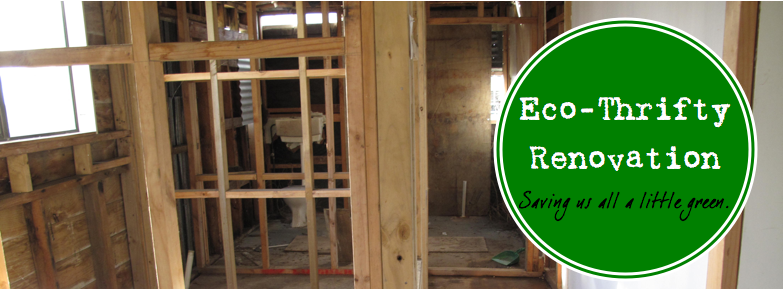
We are close enough to its completion to report on our $2,000 kitchen. (You may recall our $2,000 bathroom from a post in October.) The image above is an attempt to mimic the masthead of this blog, although that image was taken through the studs of a wall that now is lined with Gib ("sheetrock"). The "after" picture was taken about 1 metre in front of the spot where the "before" was. The image below gives a fuller picture of what this corner now looks like.


The far corner is the north corner of the villa. If you look closely at the masthead above you can see a toilet there in the before picture. Yes, this house was moved here in the 1980s and placed with the toilet in the sunniest, warmest corner. As you may have noticed, toilets usually do not have very many windows, and so the villa remained cold on sunny, winter days. No longer. This corner is now bathed in sunlight in both winter and summer. There is so much nice afternoon light and warmth in the winter that we cut a double doorway into the lounge that had previously only received morning sun.


A reverse angle of the first images now looks like this.


What you'll notice (aside from our trashed floors) is that we have two ranges side-by-side. Interestingly, they are both made by Shacklock, but that is where the similarities end. These two are just part of a greater system for cooking and heating that includes a solar cooker, an outdoor pizza oven and a rocket stove. We expect to use the electric range for less than 10% of our total cooking needs on an annual basis. But that is a future post. I'm sure you want to know how we did this for $2,000.


Here is a rough tally:

Bench top, sink and taps: $100 on TradeMe

Cabinets, drawers and timber: Reused

Electric range: $150 on TradeMe

Refrigerator: $50 at Hayward's Auctions

Butcher block: $25 on TradeMe

Hutch: $150 at Hayward's Auctions

Coal range: $250 on TradeMe

Coal range installation: $700

Pelmets: Reused weatherboards

Grain bins and drawers: $35 at Hayward's Auctions

Plumbing: $550

Light fixtures: $50 at Hayward's Auctions

Total: $2025


*Curtains: Ask the wife


You may also be interested in the choice of colours and curtain fabric. That credit does not go to me, nor does finding these lamps at the auction last month.


It's not perfect, and the floors need to be redone, but it is a far sight better than what it was, and on a shoestring budget with a tiny ecological footprint. Ironically, our bathroom and kitchen combined come in at a price equal to or lower than 3 other items on our tally of expenses:

Solar hot water: $4,000
Insulation: $4,000
New Roof: $5,000

There are no hard set rules for eco-thrifty renovation, but these numbers should indicate where the priorities for expenditures might be.


Peace, Estwing