Sunday, December 18, 2011

Perspectives on Permaculture Abundance


From where I sit gazing out our French doors, the world is one of abundance created by 13 months of applied permaculture design. The view includes our solar-powered clothes dryer, wood-fired pizza oven, one of many veggie gardens and a glimpse of a food forest out the back.


Apples grow and ripen as muscovies patrol for snails and slugs around fig trees, peaches and tagasastes.


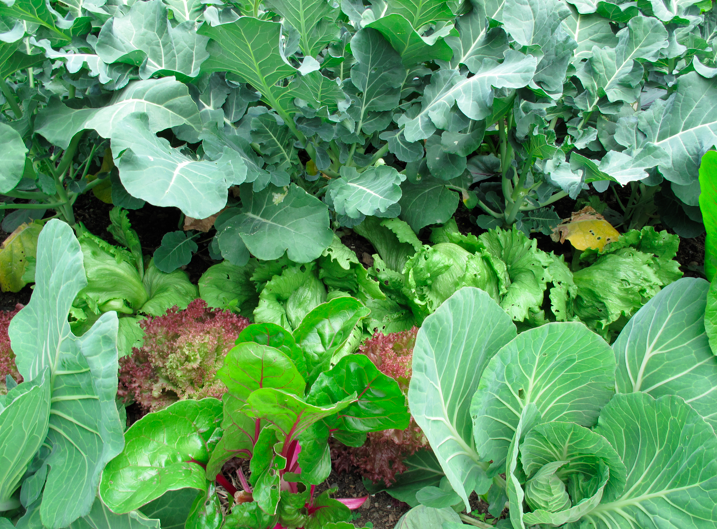
While it will take a few more years for this perennial foodscape to mature, the annual gardens are already cranking away. This cauliflower thinks it is a tree with a sizable trunk...


... and canopy.


The cat is included for scale, but I think the sink offers a better perspective.


Note: This was not the biggest cauliflower of the season. That award went three weeks ago to her cousin.


And while the cauliflowers are destined for human bellies, the leaves feed the chooks in our four dimensional ecological design system. The leaves then become eggs and fertilizer.


As potatoes and garlic are harvested at the end of their growth...


... our first courgette forms.


And a host of other green things actively convert sunlight into nutrition.


But not to be outdone, Uncle B. steals the show.


Not Billy T. James, the cat, but what she is standing on.


Definitely the biggest I've ever grown or ever seen.


After filling the skillet, it was still too big for the cutting board. (George Bush, be afraid, be very afraid.) The moral of the story: compost, early and often.

Wishing you peace and abundance in your lives, Estwing

Wednesday, December 14, 2011

Solar Sausage Sizzlers

We have just wrapped up a year of excellent educational programming in Wanganui schools with a Solar Sausage Sizzle at Castlecliff School...


and a site visit (and solar sausage sizzle) from Ngamatea and Aberfeldy Schools.


We, The ECO School, are grateful to the Wanganui District Council for funding these awesome programmes and the Sustainable Whanganui Trust for administrative support. And I don't see the children complaining.


Our programme design is based on the latest research in environmental and sustainability education. I can say this with confidence having attended an international research symposium earlier this year across the Tasman.

International Invitational Symposium on Environmental Education Research
Queenscliff, Australia, July 2011

We seek to develop programmes that are responsive to teacher's needs in order to maximize students' learning across the school curriculum. We believe our programmes are equal in quality to the best sustainability education initiatives anywhere in the world at a fraction of the cost. And we hope that we'll be able to continue and expand our offerings during the 2012 school year.


Peace, Estwing

Monday, December 12, 2011

20/20 Hindsight

The last three weeks have been busy for us and our short-term intern, Tom. Along with building wind screens, priming, painting, transplanting, fencing, and sistering up bearers and joists, we had some time to swing a bat. It turns out that Tom is a lifelong baseball player, and our local club has been short on the men's fast pitch side. Not only did they recruit Tom, but they got me on the diamond too. We played our last game on Saturday afternoon (we won by scoring in the bottom of the last inning) and put Tom on a bus at 11 pm for an overnight ride to Auckland.


Team ECO School!


Tom joined us during a significant time of our project and our lives. After a year we are nearly finished with the renovation, but other opportunities and projects have arisen to take its place.


And as the days grow longer, our gardens - patches of earth covered with weeds and rubbish 13 months ago - are flourishing.


We have 32 fruit trees in the ground, 6 chooks, 3 muscovies, but no pear trees and no partridges. We do, however, have an awesome outdoor pizza oven shown below.


The most significant successes we've had have involved the passive solar redesign of the villa.


The term "left for dead" has never been more appropriate when applied to a house.


But we had vision and after a year, that vision has turned into hindsight.


I wrote this for the local paper on a last minute plea from a friend who is coordinating a weekly column on conservation issues. It is an unedited first draft, but I think it makes the point.


Twenty-Twenty Hindsight: A Year of Living Lightly on the Planet


We are now over the 12-month mark of renovating an abandoned villa in Castlecliff into a warm, dry energy-efficient home. When we set out on this low budget / high performance retrofit we had no specific numbers in mind for energy savings and waste reduction. We simply wanted to push the envelope and do the best we could. As it turns out, our power bill has averaged $20 per month (this includes the daily line charge) and we have spent a total of $20 in rubbish fees for the entire year. I’ve come to call this our “20-20 hindsight” but there is no reason it could not also be a 20-20 vision for others to work toward by the year 2020. Of course electric rates will increase by then, but that is all the more reason to invest in efficiency now. (At current rates of annual change, electric rates will double in under ten years.)


The first Conservation Comment I wrote in July explained the design principles we employed for our passive solar renovation that have helped us achieve low energy bills. There is nothing new or unusual about those principles: solar gain, thermal mass, insulation and draft proofing. Similarly, there is nothing new or unusual about the design principles for our approach to resource conservation: reduce, reuse and recycle. The 3 R’s have helped us reduce the cost and impact of the renovation project as well as the cost and impact of our day-to-day lives. Here are a few examples.


While we have followed the New Zealand Building Code and used treated pine, Braceline Gib, building paper, and heaps of insulation, there are also areas where we were able to reduce costs and impacts by reusing materials. Prime examples include the bathtub, vanity, washtub and toilet in the bathroom, and the bench, sink, mixer, drawers, and shelves in the kitchen. Perhaps the most visible example is the vintage Shacklock 501 multi-fuel range that I bought my wife two years ago as a wedding present and we worked with Building Control to find a way to install safely. But my personal favorites are the pelmets that I made from old weatherboards that we removed while re-cladding sections of the exterior. And, like any builder would, we saved off-cuts to use as dwangs or for other small jobs.


Regarding our household waste stream, we compost all of the food scraps and even our fish and chips papers. We save paper to burn in our Shacklock or our outdoor pizza oven (made from an old wood burner) or to mulch our gardens and fruit trees. We reuse plastic bread bags and other small non-recyclable plastic containers. Again, there is nothing special about any of this, other than the fact that we take it seriously and put out one bag of rubbish for every two months. Perhaps the most unusual thing we do at all is emphasize the costs savings rather than simply the environmental benefits. At the end of the day, eco-thrifty living makes dollars and sense.


Peace, Estwing


Friday, December 9, 2011

When its time to leave people are always a bit sad, but I have been leaving from so many places recently that I understand these leaving events as both leaving and going. Perhaps, somewhere new even if you are going back to a place you know. You will be returning with new impressions, perspective and ideas. These months abroad since my June 3rd departure from the States have been packed in full of views and visions of the places I've been, people I've met and places I'll be going. However the stars have begun to align and ideas have synchronized. Well, not completely, I am not claiming or suggesting enlightenment, but whats going on with the "Pale Blue Dot" is making much more sense then ever before. Amidst all the synthesis and understand have been some very eventful final days in Wanganui.
I associate the word final with finals, which generally means a huge test on a heap of information you hope has turned itself into knowledge and understanding. But this final week has just been full of projects and events with friends as well as the community. The pizza oven was fired at the make your own pizza party. Sausages were sizzled with the local school, and rural schools came down for a field trip visit to the little house that could. It reminded me of the days teaching skiing to little kids as the yard was buzzing with energy and questions about anything and everything they laid their eyes upon. That day ended with a bike ride round Wanganui to visit some friends at the Quaker Village and harvest bamboo for garden stakes. I also got to look down on Wanganui from the hills and really see the place I have been living in.

It has been a very welcoming to say the least. Playing softball on saturdays with the local club has been an absolute hoot, and a great reminder that its all about fun and sharing that fun. So we went down to Castcliff Intermediate to share some of the fun we have when we cook on our solar cooker. The children were super keen on our solar powered radio devices. If their shadow went across the panel the music stopped. Magically however, the sun powered our tunes. The shiny satellite looking thing we call a solar cooker was also an area of attention as it turned out sizzling sausages. One student seemed to connect the dots while they were cranking the radio. They figured out with some help that they got their energy from food, which did in fact not come from a box, but was grown by the sun. So, we are powered by the sun; a novel idea and a new and very important revelation for a 10 year old. How about that tree? The sun! Yes, the sun powers the tree and when we use the tree we are using sun power. Nelson mentioned our wood fired pizza oven. Is that solar powered too? Well, yes, it is, indirectly it is solar powered.

So we had a little party. More like a big pizza eating event. Almost completely solar powered, well probably completely solar powered. Woodfired, with all organic ingredients, veggies from the garden, and cheeses(solar powered), dough(from grain(solar powered). You see the point perhaps that the sun does some great things, all of which are free. We just need to spend a little time thinking about how to take advantage of all the sun's magical powers. Most of which is "understood." But I can tell you a fresh pizza is delicious and thats enough for my hungry belly. All the tasty ingredients were connected to the sun. Our lovely wood fire and setting sun provided some beautiful solar powered atmosphere. All the while some guests were asking me if I was excited to return home to the states. I answered a little uneasy, but very psyched about sharing everything I've come to understand about our solar powered Pale Blue Dot.
This past morning some rural students came for an end of school year field trip to wrap up some of their studies on energy. The quiet sunny day was suddenly buzzing with young students and inquisitive minds. We got to share our solar cooking devices, the gardens, the chickens and the house. It blew me away how in tune some of the students were. I asked the what the chickens like to eat. The answer I got was grass and green things, but then they poop and fertilize the grass. All I added was that I get to then eat the eggs from the chickens. They seemed to get a little chuckle out of that. After we had shared about the little blue house and their solar cooked lunches were consumed some students shared with me their science projects. Not your regular science projects. They had studied up on alternative forms of energy and had heaps to share. This became I a moment full of good energy. Young kids very psyched on how their maths and sciences connect to their solar cooked lunches!

Tomorrow I will be on my way, wrapping up my time here in Wanganui and at 10 Arawa Pl. I am sad to leave this little place, an amazing case study on suburban sustainability, but I am happy to be able to share it will people, especially kids. After many hours of travel I will find myself amongst the cold NewEngland winter. People here in warm sunny New Zealand appear confused about my level of excitement for the snow winter. It's no bother to me, I'll have heaps of time to share pictures and new perspectives from the places I've been. I will be leaving here and returning home with hopes and ambitions to bring a little of my travels home.

Thanks for reading,
the 20 Something


Monday, December 5, 2011

Hugelkultur


"Hugelkultur is an ancient form of sheet composting developed in Eastern Europe. It uses woody wastes such as fallen logs and pruned branches in order to build soil fertility and improve drainage and moisture retention."
-kerryg, source: http://kerryg.hubpages.com/hub/Hugelkultur-Using-Woody-Waste-in-Composting

I first learned about hugelkultur from a doco on Sepp Holtzer I saw at Rainbow Valley Farm a few years ago, but I have never used it. Until now.

Through a fortunate series of events, a large pile of small sticks landed on our 700 square metres of sand and weeds about 4 months ago. One of our main objectives has been to build organic matter in our soils. The pile sat for a long time until last week when we decided to experiment with hugelkultur while shifting a compost pile and planting apple trees in the lee of our recent wind break project. This is what it looked like around noontime.


We raked the compost away from the fence and took the pallets away. It may be hard to see in this shot, but the grade drops away abruptly before the fence.


This served as a pre-dug trench ready for hugelkultur application. But I did not want organic matter against the iron fence or the timber rail which would be buried in the process, so I used rubble and broken bricks to create a space between the sticks we would be burying and the fence.


Then we backfilled with the sticks...


... and raked the compost back on top of the sticks. Later, we leveled the area with black sand from the beach.


To add extra carbon and calcium to the apple trees we lined the bottom of the holes with paper and crumbled pieces of Gib (dry wall).


And provided plenty of compost to the saplings.


By late afternoon this untidy corner of the section looked like this. This growing season the pumpkins will run over the ground and provide a living mulch. Next year the trees should begin to fill out in the lee of the wind netting and fill out to hide the corrugated iron fence.


We're hoping that as the tree roots grow outward the buried sticks will decompose and feed the apples for many years to come.


Peace, Estwing


Friday, December 2, 2011

Window Treatments

Although it is getting warmer and warmer in the Southern Hemisphere, we are thinking ahead to next winter in hopes of improving the performance of our passive solar retrofit. Because we have decided to embrace the eco-thrifty approach, we opted against buying all new double-glazed windows. Instead we are going with a combination of pelmets and thermal curtains, plastic window film in some cases, and one example of home-made double-glazing as seen below.

The New Zealand building code requires us to install safety glass in our bathroom. The two pieces of glass cost us $315. We had the glass professionally installed in the opening window on the left. But for the fixed window on the right I decided to keep the old glass on the exterior and add the safety glass inside to meet the code and to form a double-pane window.


To do this I gathered my materials together...


... and started by cutting two vertical battens to fit. I primed them and then added two coats of paint to make sure moisture does not travel through the wood and into the window cavity. I also put a small packet of silica "dessicant" between the panes to absorb any moisture that may be in there when I seal it all up.


I used a liquid nails product to fix the painted battens to the aluminium frame, and a silicone to fix the glass to the battens. Then I added another pair of battens - these horizontally - at the top and bottom to hold the glass firmly in place (as seen in the top picture). I'll put another coat of sealant over all the gaps to keep moisture out. And for less than the cost of replacing both pieces of glass, we have replaced one and gained a double-paned window for the other.

This type of low budget / high performance approach is similar to our extensive use of pelmets in combination with thermal curtains, shown here in the bathroom window discussed above.


This pelmet also serves as a crown molding, and is made from weather boards we removed from the exterior during the renovation. This gives an idea of what they looked like.


Our abandoned house had been a billboard for local taggers. But once sanded and painted...


... the old weatherboards make beautiful interior window elements.


In order to ensure enough clearance for the curtain to slide, I nailed 2 x 2 off-cuts into the studs on either side of the door.


I also sealed the gap between the wall and ceiling with duct tape to prevent any air leakage. And there you have it. I cannot emphasize enough my advocacy of pelmets for eco-thrifty window insulation. This post from July explains how the physics of pelmets works.


Peace, Estwing